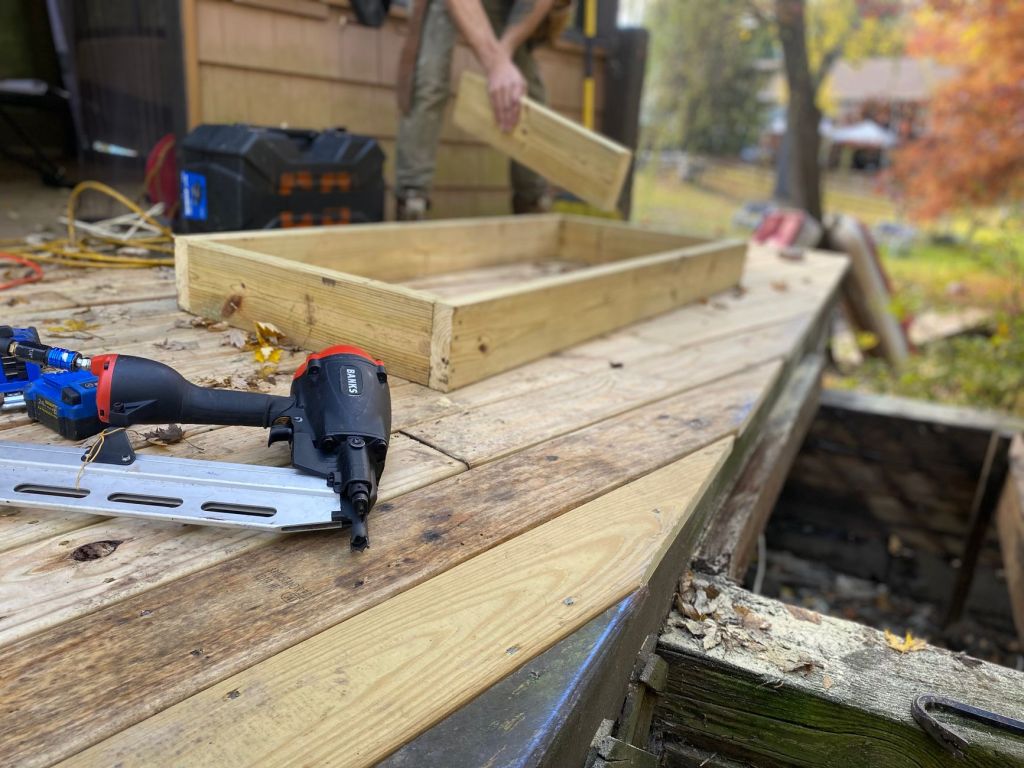
It was time to start putting the plan into action.
Over the weekend I tackled the first part of the great raised-bed relocation and expansion project. This involved dismantling things I’d previously built, rebuilding them in a slightly different configuration, moving approximately a tonne of soil and generally discovering that nothing is ever quite as straightforward as it looks on paper.
Fortunately, the weather was perfect for it. For the first weekend in October, it was warm, sunny and dry, with virtually no breeze.
Obviously, I had to take advantage of it.
It started with taking things apart
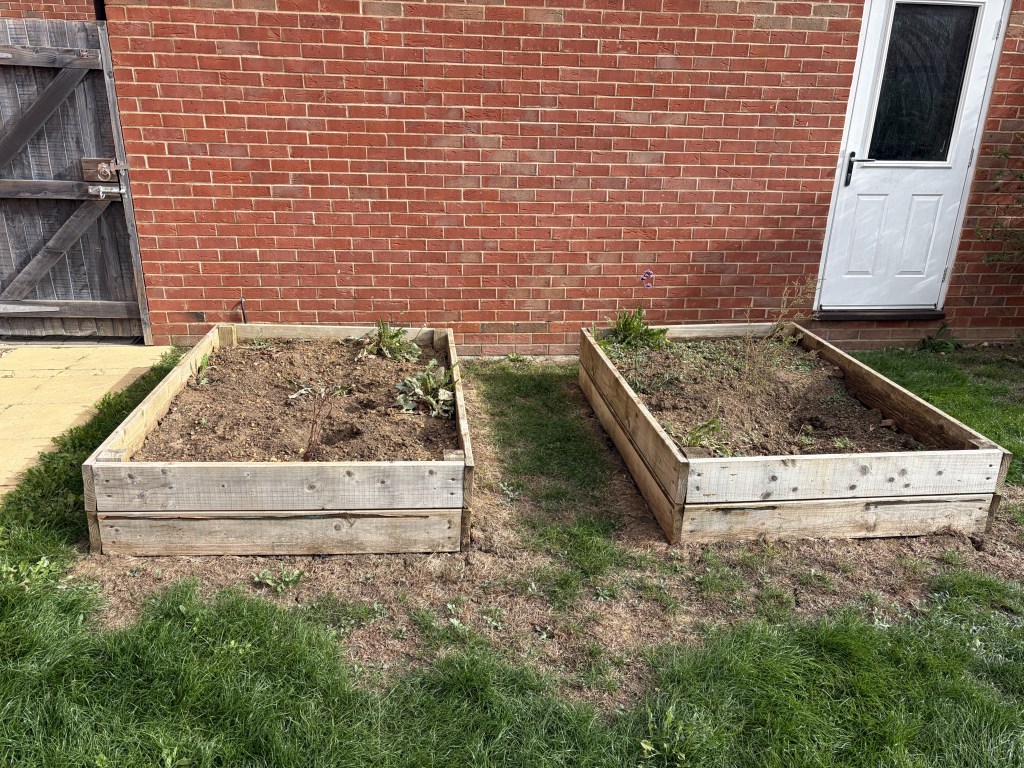
The first job was to lift the frames of the existing raised beds out of their original position.
I then had to remove enough of the soil from them to allow the new, larger beds to go into their new home without having to move all of the soil.
This seemed like a sensible plan.
Unfortunately, the timber I’d ordered to expand the beds had other ideas.
I’d bought the new timber from the same company I’d originally bought the raised beds from, so I rather naively assumed that the new planks would be the same size as the old ones.
They weren’t.
The new planks were wider.
Now, I’m sure there’s a perfectly good reason for this. Timber sizes change, manufacturing tolerances exist and somewhere in the world there is probably a very sensible explanation.
None of which helped me very much.
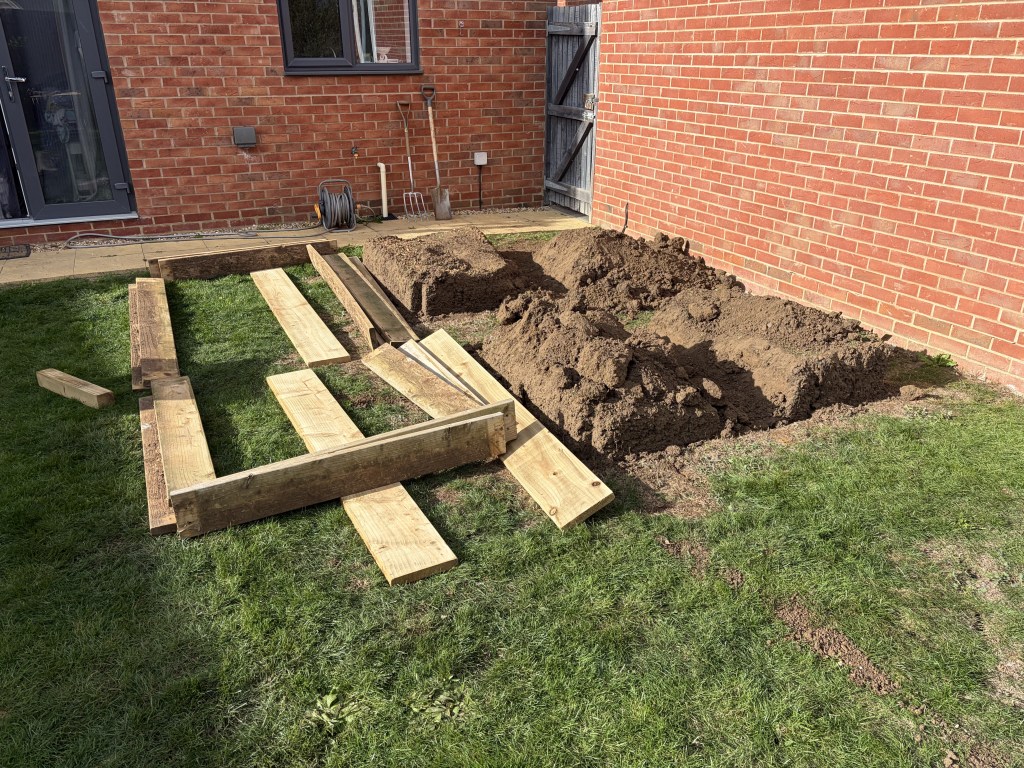
So instead of simply adding another level to the existing beds, I had to completely dismantle them, lay all the timber out and work out what I could build with what I had.
At this point, the garden project briefly became a large wooden jigsaw puzzle.
Saturday: screws, screws and more screws
Most of Saturday was spent rebuilding the beds using the original timber.
I decided to build the new frame on the patio rather than trying to assemble it in the garden. This had the considerable advantage that the patio is actually flat, meaning I could build a level frame without having to measure everything approximately seventeen times.
It was also at this point that I made what I consider to be an excellent decision.
I used power tools: a cordless drill and a cordless impact driver, to be precise.
This turned out to be considerably quicker than manually screwing everything together, and also meant I didn’t have to develop a strange new condition involving repetitive wrist movements.
Disassembling the beds was much quicker.
Reassembling them was much quicker.
In fact, I’m now wondering why I ever use a screwdriver for anything.
By the end of Saturday, I’d rebuilt the main structure and, somewhat surprisingly, still had some timber left over.
This was fortunate.
I would later discover that I’d accidentally created a new category of building material called “stuff I might need later”.
Sunday: let’s add another level
Sunday was all about adding the new upper level.
I cut the new timber to size using the circular saw and started building the additional section. I also added a couple of braces to keep everything at a consistent width and, more importantly, to stop the whole thing eventually deciding to become a parallelogram.
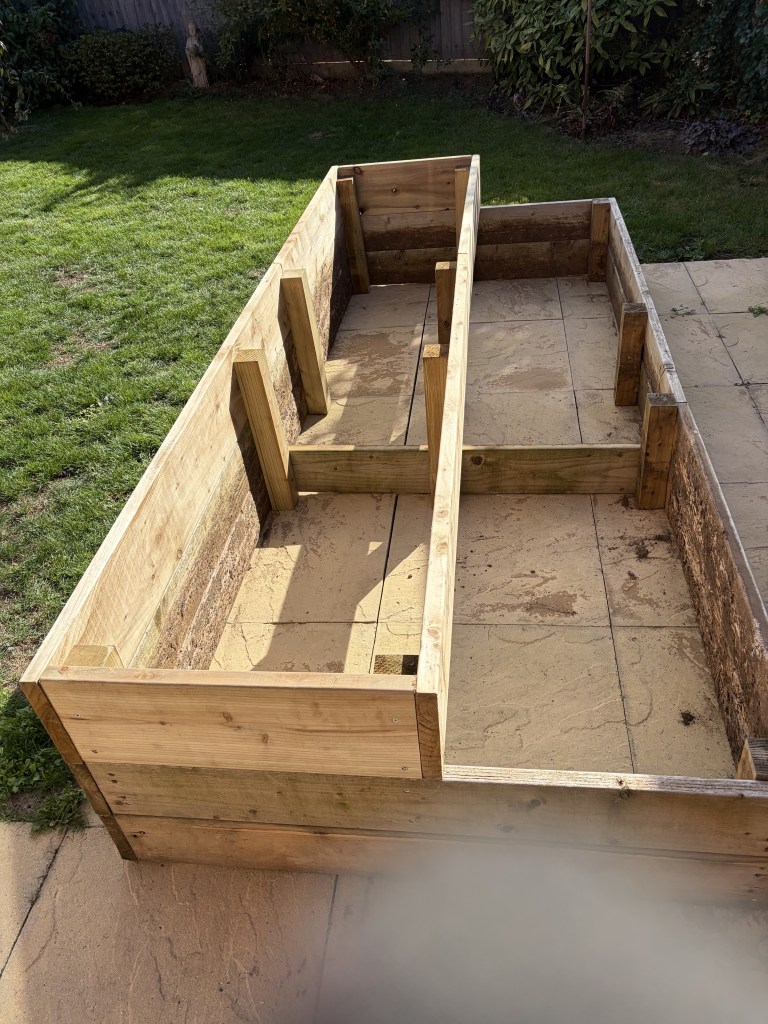
Once it was assembled, I had to move the whole structure into its final position alongside the garage.
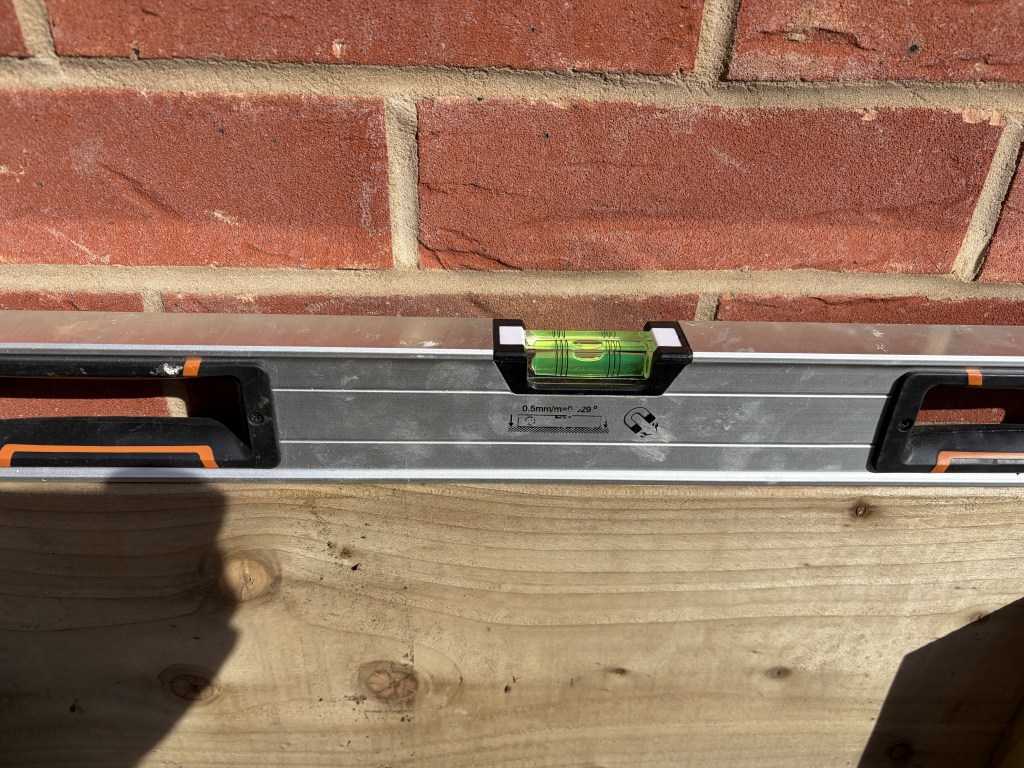
Then I discovered another problem: the garage appeared not to be level. Or, at least, the line of bricks made it look like it wasn’t level. This wasn’t particularly helpful when trying to level a large wooden structure.
After a fair amount of measuring, adjusting, checking, adjusting again and standing back with the sort of expression that I hoped made me look like I knew what I was doing, I eventually got it level.
I have photographs to prove it.
The garage may disagree, but the raised bed is definitely level.
I’m choosing to believe the photographs.
Then came the soil
With the frame finally where it needed to be, there was only one thing left to do.
Move the remaining soil into it.
About a tonne of soil.
Because apparently building a raised bed isn’t enough exercise on its own.
This took a little longer than I’d anticipated, but I took it steadily and managed to get all of it moved over in a couple of hours.
There is something strangely satisfying about taking a large pile of soil and gradually making it disappear.
There is also something slightly less satisfying about remembering that we need to buy more.
Grandchild access and other improvements
My wife had a great suggestion while we were looking at what we thought were the finished beds.
One of the reasons we’re doing all this is to make the garden easier for our grandchild to get involved with. We want them to be able to get close to the plants and help with planting and watering without having to perform some sort of miniature assault course.
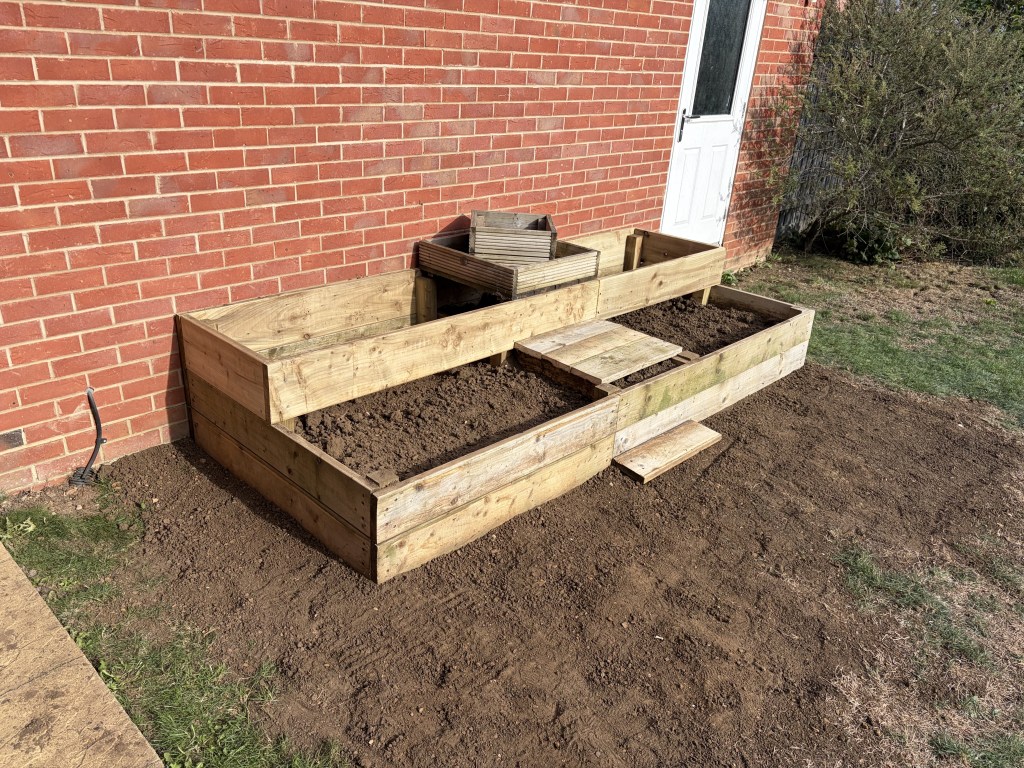
So my wife suggested adding some “steps” into the middle section.
Fortunately, that leftover timber I’d been pleased about earlier suddenly became very useful.
I added some extra braces and have temporarily put some offcuts in place to see how everything will work.
We’ll need to buy some more timber to make the steps properly, but at least we now have an idea of what we’re doing.
She also suggested adding a square planter that we’d previously had sitting on the patio: it fits almost perfectly into the upper level.
Not quite finished yet
There is still plenty to do.
The beds need painting, the steps need finishing properly and we need to order more soil before we can fill the new sections.
And then, eventually, there will be plants.
Assuming I haven’t forgotten what we’re doing by then.
All told, I reckon I spent around eight hours working on the beds over the weekend, excluding lunch breaks, standing around looking at things and the occasional pause to question whether I’d made a terrible mistake.
But the important thing is that the majority of the work is now done.
And, if I say so myself, it has gone rather well.
The beds are bigger, they’re in their new location, they’re level, the soil is back where it belongs and we’ve even got the beginnings of a system that should make it easier for our grandson to get involved.
There’s still painting, more timber, more soil and quite a lot of planting to come.
But for now, I’m calling it a success.
After all, the plan was to move and expand the raised beds.
That’s exactly what I’ve done.


Leave a Reply